
How Utah Tech Brings Career Exploration Into the Student Journey
Utah Tech University is making career exploration easier for students to access throughout their journey, connecting them with relevant labor market insights while giving advisors more time to help them turn those insights into action.
The Lightcast Team

Today’s college students are making a significant investment in their education, and they want to understand where that investment can take them.
For Utah Tech University’s more than 13,000 learners, that means choosing a program isn’t just about what to study. It’s also about understanding the career paths and opportunities that choice can open up.
But giving students a clear view of those opportunities hasn’t always been easy. Utah Tech’s Career Services team was used to hearing the same questions again and again:
What can I do with my major? What does this career pay? What opportunities are available in my area?
Answering those questions with relevant, reliable labor market information — and delivering it in a way students could easily access and understand — was a challenge.
Advisors could point students to government sites such as O*NET, but Shane Blocker, Director of Career Coaching at Utah Tech, recognized that the interface for those sites was dated and could be overwhelming to navigate. His team’s previous career exploration platform introduced another barrier, requiring students to create an account with a special access code before they could even get started.
Utah Tech needed a more engaging and scalable way for students to explore career paths, understand the opportunities connected to their programs, and make informed decisions about where their education could take them.
That need led the university to Lightcast’s Career Coach and Widget Builder solutions.
Making Career Guidance Accessible and Actionable
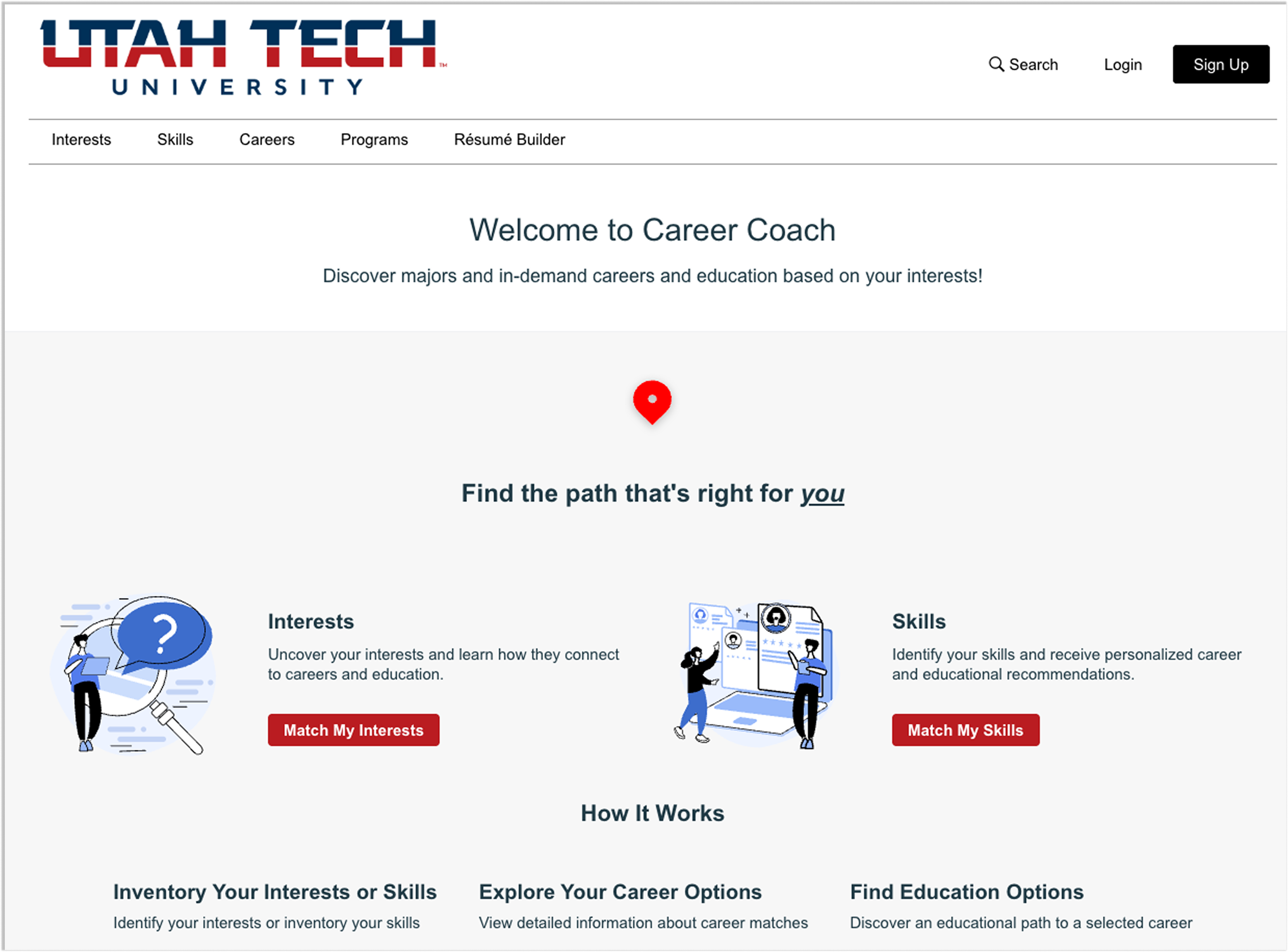
Utah Tech’s Career Coach site gives students an approachable way to explore careers, see regional employment and wage trends, and discover how their interests and skills connect to different fields.
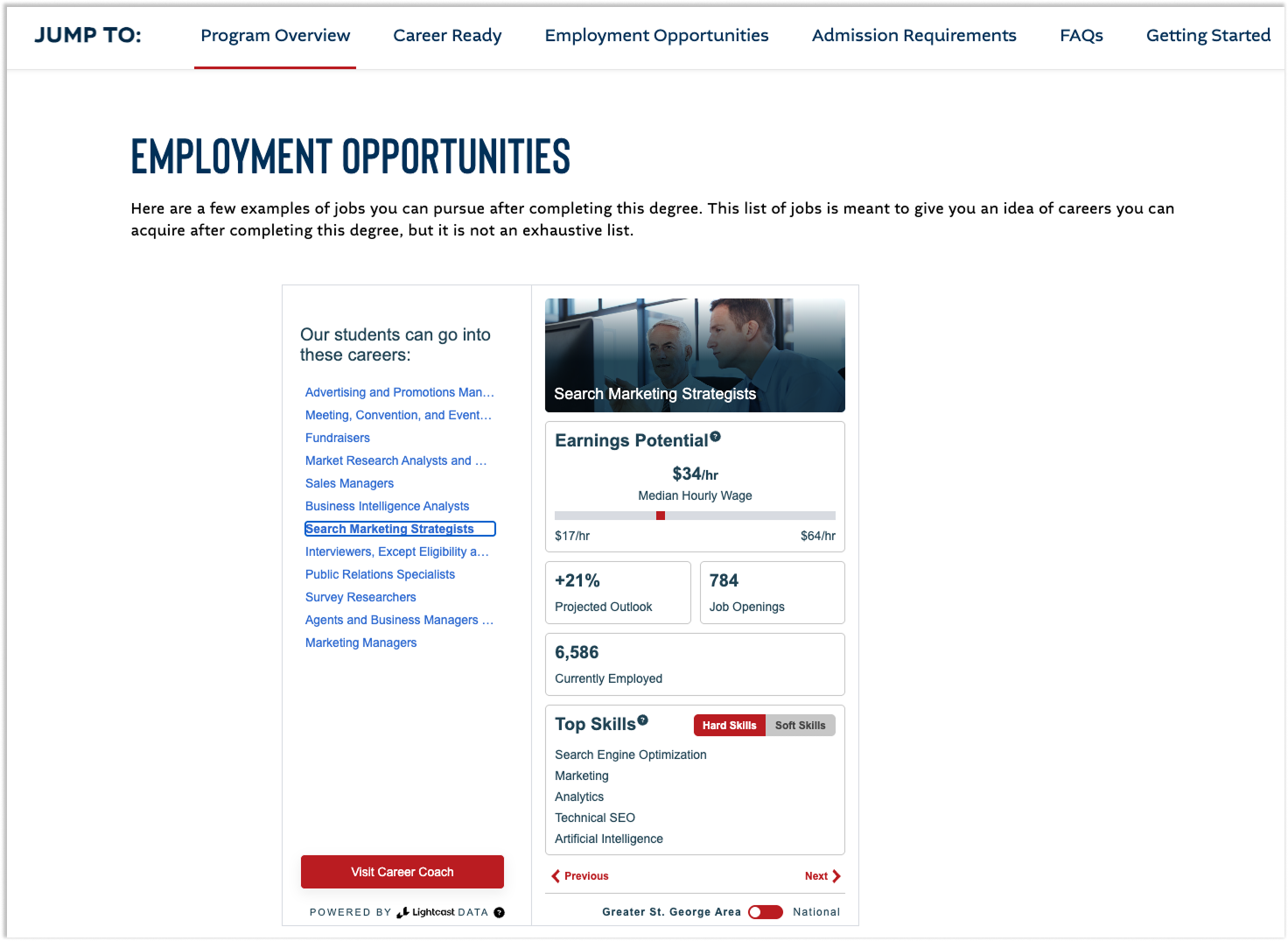
Recognizing that career outcomes matter when students are weighing their academic options, Utah Tech also uses Lightcast’s Widget Builder to embed relevant labor market insights directly into academic program pages. That gives current and prospective students a clearer view of how the programs they’re exploring connect to real-world career opportunities, and demonstrates Utah Tech’s commitment to preparing students for what comes next
Together, the tools are changing the student experience by making career information easier to access and understand wherever students are in their academic journey. And students are engaging: as of Spring 2026, Utah Tech averaged 500 Career Coach visits per month and more than 600 weekly views of Widget Builder-powered content.
More Time Advising, Less Time Searching
For Blocker, one of Career Coach’s biggest advantages is how quickly it gets students and advisors to useful information.
In the past, a student asking about an unfamiliar career or a particular major could send an appointment in several directions. A coach might need one resource for relevant job growth trends, another for wage percentiles, another for top employers, and another for current job postings in the area.
Career Coach brings those pieces together in an experience designed to be easy for students and advisors to navigate. For Blocker, that has helped Career Services feel “way more modern” — an important factor in a field where engagement is critical, but legacy resources can leave students feeling alienated by a dated or convoluted user experience.
As Blocker described the impact, Career Coach keeps appointments from becoming an exercise in “surfing the internet together.” Instead, advisors can move more quickly to the question that matters most: What should the student do with this information?
“For me as a career coach, I feel more efficient and effective because I’m giving them the information they want to know right off the bat.”
In other words, Career Coach doesn’t replace career coaching. Instead, it gives coaches a more powerful toolkit for doing what they do best. Rather than spending limited appointment time tracking down data, coaches can focus on helping students interpret what they are seeing, weigh options, and decide on next steps.
From Picking a Major to Planning a Pathway
Students come to Career Services at very different starting points. Some already know what they want to study and simply want to “nerd out,” as Blocker put it, about potential career pathways.
Others arrive unsure of what to pursue, in need of help to clarify their goals for both college and career.
Career Coach helps UT offer a reliable on-ramp for students at either stage. Those with a direction in mind can search for specific programs or careers and quickly find reliable labor market information specific to their goals. Students who are unsure where to begin can start with Career Coach’s interest assessment or skill inventory, using the results to identify potential paths and begin a conversation with an advisor.
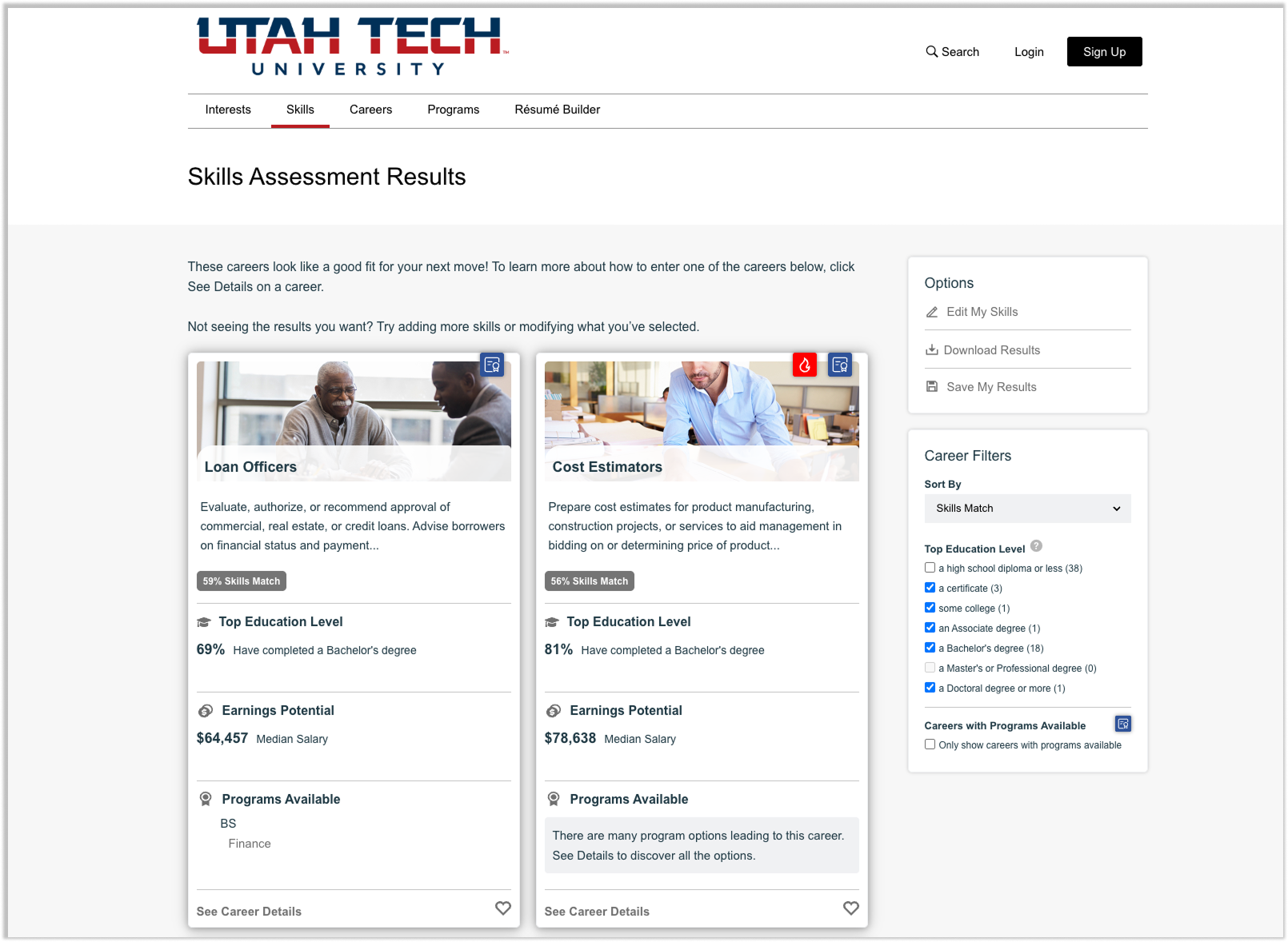
That flexibility helps address one of the most common questions Utah Tech’s career coaches hear: “I don’t know what I can do with my major.”
Wage data has been especially valuable. Students sometimes arrived with wage expectations based on anecdotes from family members or friends. Career Coach grounds those conversations in up-to-date, region-specific labor market data, helping students establish more realistic expectations and make better-informed decisions about which path to pursue.
For students at either end of the career exploration spectrum, having relevant information presented in an approachable way can make the future feel more clear.
Blocker sees the difference in appointments.
“There’s no blank stares when you use Career Coach,” he said. “It presents the information really easily for students to follow and they say, ‘Yeah, that tells me everything I want to know.’”
Building Career Exploration into the Student Journey
Utah Tech’s approach goes beyond making Career Coach available and hoping students find it. Instead, the university brings career exploration into multiple points of the student journey.
Career Coach is used in freshman advising appointments, shared in classroom presentations, and leveraged for career coaching sessions and follow-up. It’s also featured prominently on Utah Tech’s Career Services webpage so students can easily find and take advantage of the tool.
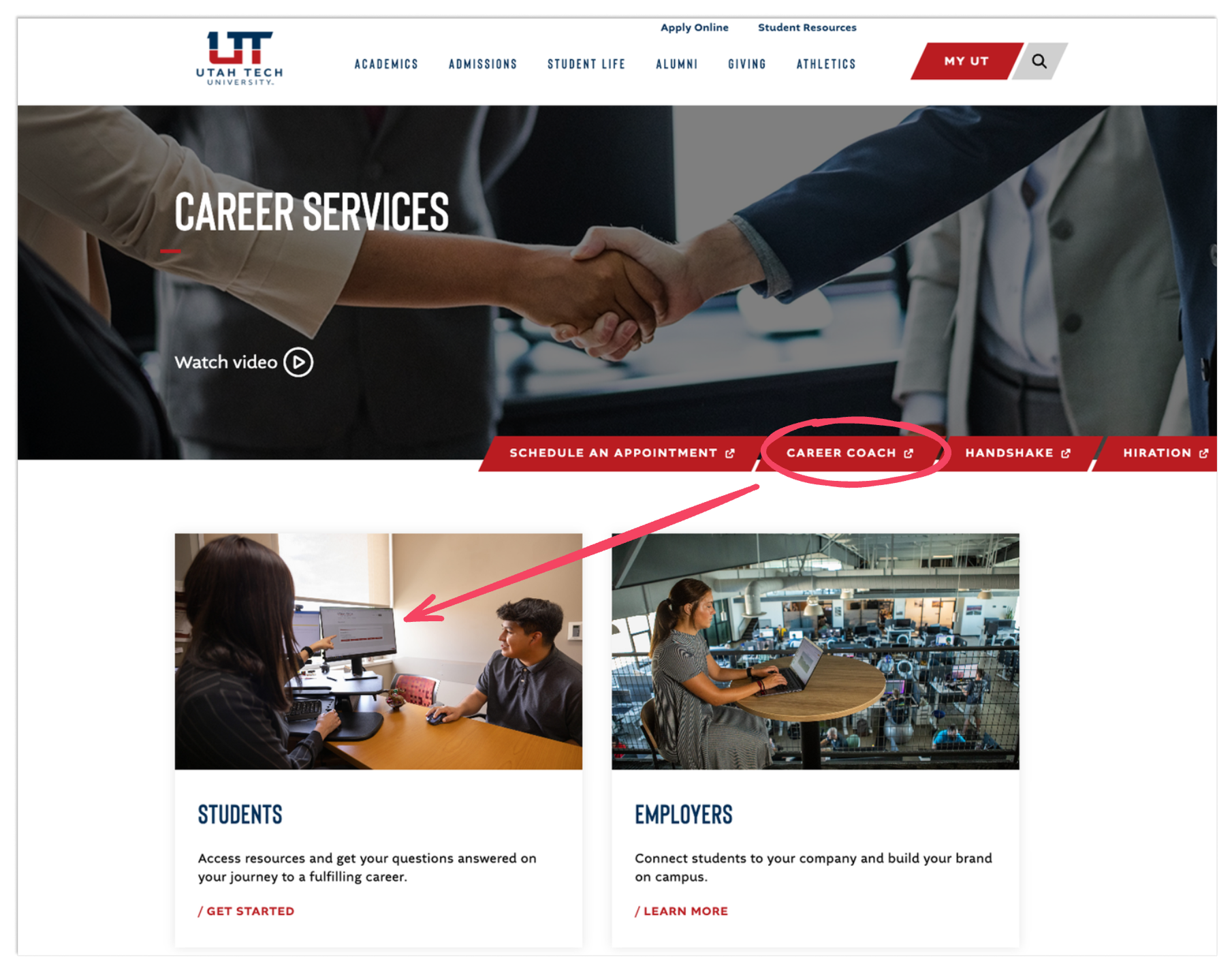
Early repeated exposure is significant because students do not always seek career support on their own. By integrating Career Coach across various touchpoints, Utah Tech gives students multiple opportunities to discover the resource and return to it as new career questions arise.
It also gives faculty a helpful resource for answering career questions that come up in the classroom or in impromptu conversations with students. As a result, data-informed career conversations can happen in more places than formal advising appointments at the Career Center.
Embedding Career Insight in Program Pages
Widget Builder extends that same philosophy to Utah Tech’s website.
Rather than requiring students to navigate away from an academic program page to find career information, Widget Builder allows UT to place labor market and career insights directly into the program research experience.
That matters because students may be thinking about career outcomes before they ever interact with Career Services. A prospective or current student exploring an academic program (e.g. Utah Tech’s Marketing Certificate) can see relevant labor market information at the moment they are considering that field, making the connection between education and career opportunity more visible.
Together, Career Coach and Widget Builder deliver two complementary experiences for learners: one supports deeper career and academic exploration, while the other brings career context upstream to the places students are already researching programs.
Engagement that Demonstrates Value
Utah Tech reports strong engagement with both tools, averaging 500 Career Coach visits per month and more than 600 Widget Builder views per week in Spring 2026 — evidence that students are eager to engage with relevant career insights when they’re readily available.
The value is just as clear for Blocker and his fellow advisors. Career Coach has become so embedded in their daily work that the team was unsure how they would replace it. “We can’t do our job without it,” he said.
For other institutions facing similar questions about majors, salaries, and career pathways, Utah Tech’s experience points to a simple but powerful lesson: when career information is easy to find, easy to understand, and available at critical points in the student journey, Career Services can spend less time helping students find information and more time helping them turn those insights into action.
Ready to help students get the data they need while giving your career team more time for what matters? Explore Career Coach and Widget Builder, or connect with our team to learn more.
Recent Posts

He Left Banking to Change Oil. Now He Leads the Shop.

The Lightcast Skills Taxonomy
