
A Data-Driven Approach to Academic and Workforce Alignment

The North Dakota University System (NDUS) oversees 11 public colleges and universities across the state, ensuring that academic programs align with workforce demand and meet the needs of both students and employers. With a broad range of stakeholders to serve and economic conditions to account for, it’s critical that NDUS has objective, standardized labor market data and a consistent, evidence-based process to evaluate program decisions. That’s why they rely on Lightcast data as a trusted source of truth.
"Lightcast has come in clutch at times where there’s disagreement or uncertainty around which programs we really need based on job demand,” said Ryan Jockers, Deputy Director of Data and AI Initiatives at NDUS. “Because the data is not lying to us.” Whether it’s a board meeting, a legislative session, or an urgent request from system leadership, Lightcast data provides confidence to make timely, well-founded decisions.
This reliance on timely, objective insight shows up across NDUS’s work in several important ways:
1. Supporting New Program Proposals with Objective Data
In the absence of objective data, some institutions may base program decisions on anecdotal evidence—such as feedback from individual businesses or industry groups—that could be biased or incomplete. Not at NDUS.
“When you're looking at bringing these program proposals to a board level, how can you objectively make decisions about what's good for the state?” asked Jockers. The answer has been integrating labor market insight from Lightcast’s Analyst platform directly into the program proposal process.
NDUS provides access to Analyst for staff at all 11 member institutions, and mandates that every new academic program request include a Lightcast labor market report. Now, everyone has a shared basis for decision making, and the State Board of Higher Education is always equipped with relevant data to validate market demand for proposed programs.
These decisions have a direct impact on enrollment — which has remained strong for NDUS — because they help to ensure that educational pathways are available for students who might otherwise have to leave North Dakota to pursue their desired career pathway.
“We've been trying to get key programs in different regions of our state because otherwise, the students just leave,” said Jockers. “They'll go somewhere else. So if there's all this untapped potential that the data is showing, then we know we should go after it.”
The impact:
Consistent, objective data ensures decisions are made in the best interest of the state.
Lightcast provides “street cred,” as Ryan puts it, because the information comes from a trusted, independent source.
The system can avoid unnecessary duplication of programs while supporting new offerings where the data clearly shows demand—for example, expanding dental hygienist programs across different regions of North Dakota.
At least one institution – Valley City State University – is also using the data on its program pages to show prospective students what kinds of careers they can expect after graduation.
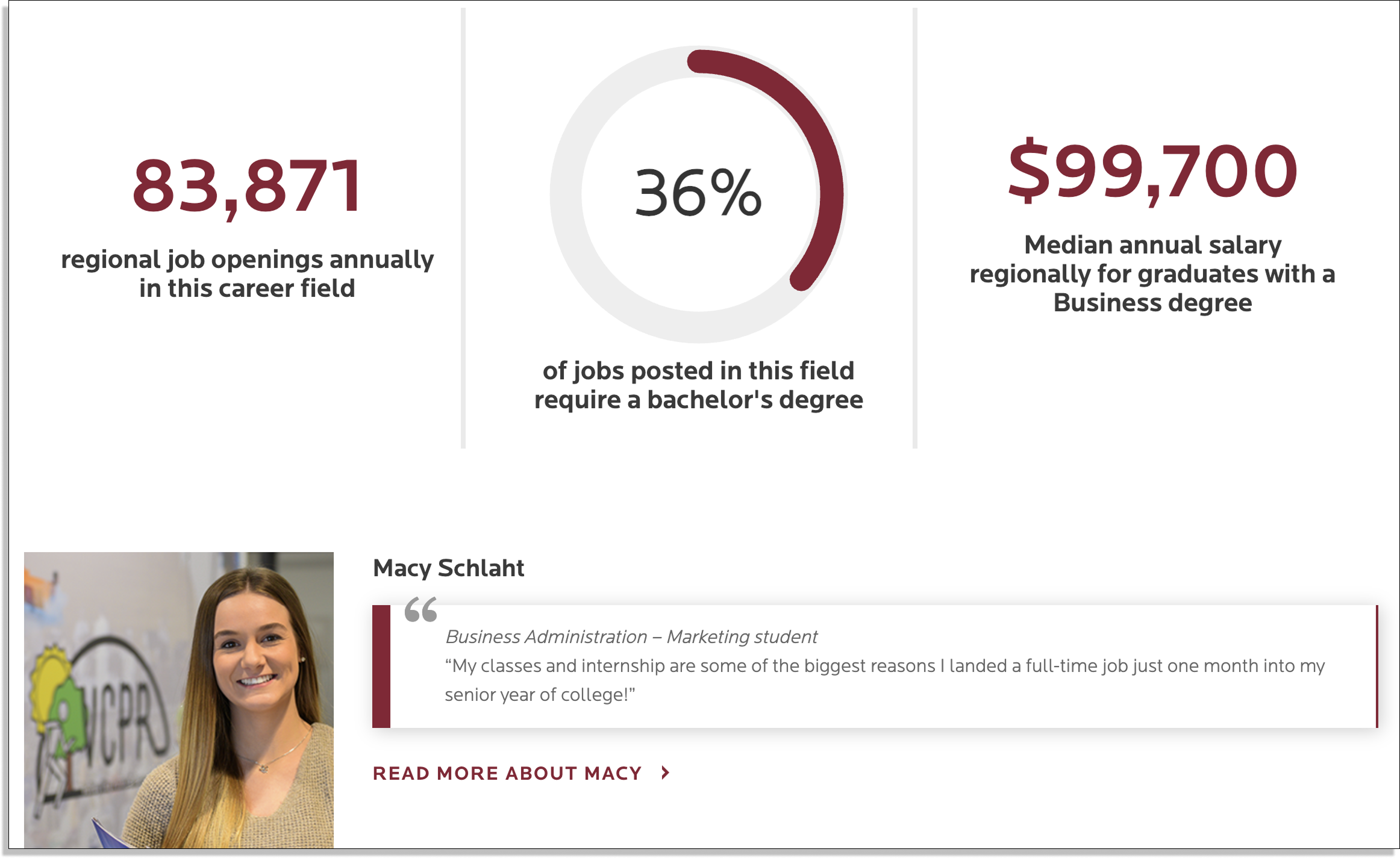
Valley City State University features employment data from Analyst alongside alumni quotes on their academic program pages.
2. Informing Leadership and Legislative Decisions
Beyond program approvals, Jockers often runs ad hoc reports for NDUS leadership, board members, and legislators.
Jockers uses Lightcast’s Analyst platform to generate custom reports within minutes. For example, when lawmakers considered a scholarship for emergency services, NDUS provided Lightcast data on workforce demand that was ultimately included in the fiscal notes of the bill.
Critically, Analyst makes this information accessible enough that Jockers is able to respond to these requests quickly, delivering timely support when data is called for to guide high-level discussions.
“It took me maybe five minutes to go into Analyst, pick the exact occupations they were interested in, and save them as a custom group,” said Jockers. “I ran the report and we were done.”
The impact:
Fast turnaround gives decision-makers the timely insights they need.
Data strengthens the credibility of NDUS in legislative discussions.
Regional comparisons (e.g., North Dakota vs. Minnesota or Montana) highlight the broader labor market dynamics that affect student demand and state policy.
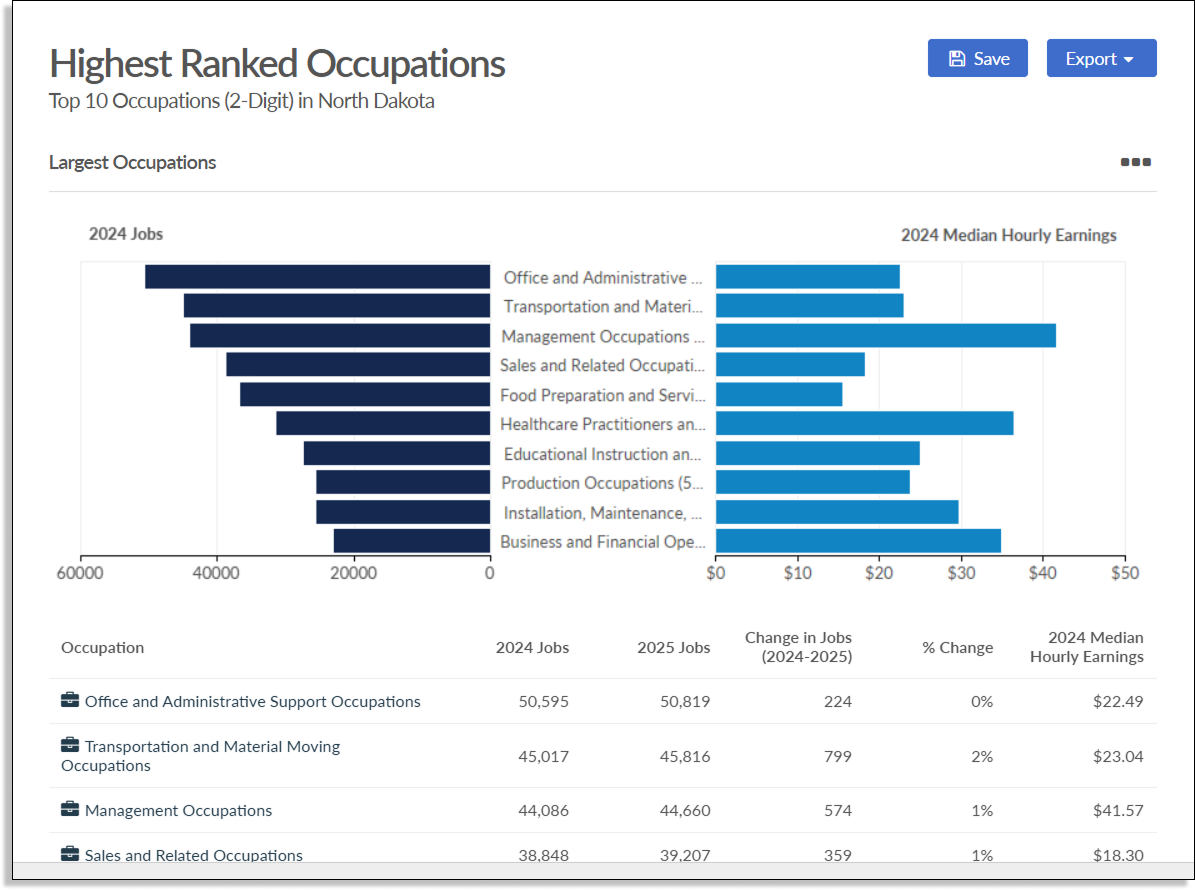
Highest Ranked Occupations Report, from Analyst
3. Using Job Postings Data to Strengthen Hiring
NDUS has also extended its use of Lightcast data into human resources and recruitment.
Traditional higher ed salary surveys, like CUPA, provide useful benchmarks but are lagging and limited in scope. For more real-time insight, Jockers uses Lightcast job postings analytics. The data provides clarity on the latest market trends, in-demand skills, and example job descriptions.
“The Lightcast report will give us information that’s a lot more real time, so we can know – as of yesterday – this is what the market's saying,” said Jockers.
The impact:
Hiring managers gain confidence that their postings reflect the current labor market.
Job descriptions are more closely aligned with employer and candidate expectations.
Real-time salary data supports more accurate and competitive compensation decisions.
Objective Insight for Confident Decisions
For NDUS, the real value of Lightcast lies in consistency and credibility. Every campus, board member, and legislator is working from the same set of trusted data. That shared foundation makes it possible to evaluate new academic programs objectively, and equip leadership with evidence-based insights for confident decision making.
“The most valuable thing is having standardized, objective labor market data you can use to make program decisions," said Jockers. “If you can have something solid, dependable, and unbiased that’s curated for this purpose—why wouldn’t you use it?”
Explore how Analyst can help your institution make data-driven decisions that align academic programs with workforce demand. Contact Lightcast to start uncovering actionable insights today.
Recent Posts

He Found His Trade in Flip-Flops. Thirty Years Later, He Calls It a Brotherhood.

Highest Explosives Workers’ Salaries in the US
