
His Six-Year Business Plan Took 23 Years. He Never Let It Go.
Military service repeatedly delayed Brian Murphy’s plan to build his own HVAC-R company. Thirteen years after launching Arctic Chill, his reputation keeps the phone ringing—and at 56, he has no intention of retiring anytime soon.

JP Lespinasse
VP of Brand, Content and Comms, Lightcast

Hannah Grieser
Researcher & Designer, Lightcast

Brian Murphy’s title is service technician. His actual job description is considerably longer.
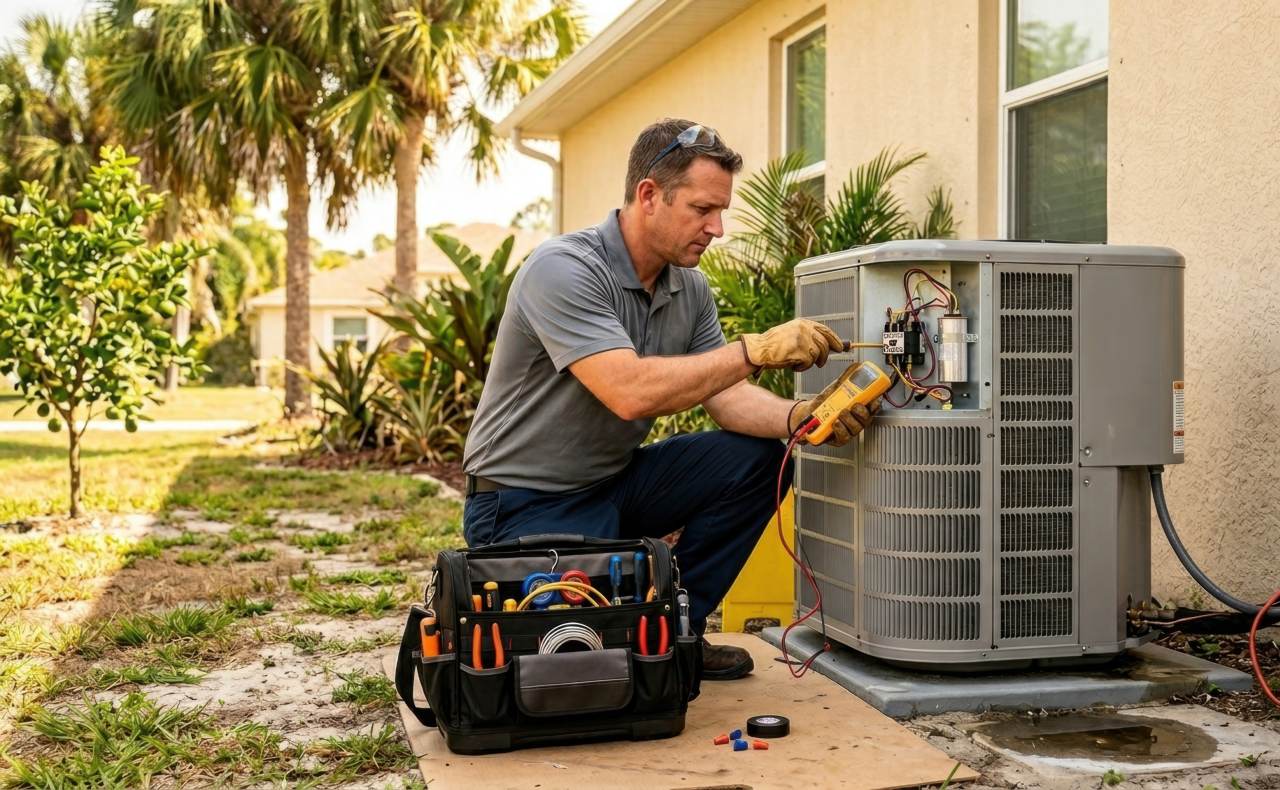
Brian owns Arctic Chill, a heating, ventilation, air conditioning, and refrigeration company in Michigan. On any given day, he might repair an air conditioner, furnace, ice machine, commercial refrigeration system, pool heater, oven, dishwasher, or frozen-yogurt machine. He also designs residential ductwork systems to improve comfort, airflow, and energy efficiency. [SOC: 49-9021 Heating, Air Conditioning, and Refrigeration Mechanics and Installers]
Then there are the responsibilities that come with owning the company.
“I wear all the hats,” Brian said.
Those hats include customer service, installation, ordering parts, billing, collecting payments, bookkeeping, entering invoices, maintaining vehicles and equipment, and training students and apprentices. Brian has spent 34 years in HVAC-R and approximately 40 years in the trades. The career has given him financial security, a business of his own, and work he still finds rewarding.
It began with a change of plans.
Choosing a different future
Brian entered the US Navy intending to become a Navy SEAL. His long-term goal was to use that training to become a State Trooper.
He completed the initial screening for Basic Underwater Demolition/SEAL training, commonly known as BUD/S. With more candidates than available training positions, Brian was told to report to his duty station and return after 21 months. He stayed in shape, secured his commanding officer’s approval, and studied electricity within the Navy’s aviation community.
Then life pulled him in another direction. Brian had fallen in love. As he put it, he decided “to chase her instead of the military or State Police.”
After completing three years of active duty, Brian’s future father-in-law introduced him to HVAC-R. Brian began working for him and enrolled in trade school. The work felt natural. Brian was mechanically inclined, understood electricity, and quickly became interested in the refrigeration cycle and the variety of equipment he encountered.
“I enjoy the trade,” he said. “You’re always learning something new. Every day is different, with a new challenge.”
Learning is part of the job
Brian’s initial education was only the beginning.
He holds a journeyman’s card and a Michigan mechanical license covering seven areas of the trade. He has also earned numerous certificates through manufacturer-led factory schools. Some manufacturers provide training at no cost because they want qualified technicians working on their equipment. Other programs charge tuition or fees. Brian continues to attend both.
The investment is essential because the equipment never stops evolving.
That expectation of continuous learning has shaped Brian’s view of professionalism. A good technician needs mechanical ability and technical knowledge, but Brian places equal emphasis on ethics, communication, and personal responsibility. He wants technicians who will keep learning, present themselves professionally, communicate respectfully with customers, and take pride in the quality of their work.
The alternative is costly for everyone. When technicians fail to understand the equipment they service, they may misdiagnose problems, take unnecessary shortcuts, or persuade customers to pay for work they do not need.
Brian believes the best protection against that outcome is knowledge paired with integrity.
Planning to become his own boss
By his second year in HVAC-R, Brian knew that he eventually wanted to own a company.
He gave himself six years to reach that goal.
As he moved between employers, Brian paid attention to much more than technical work. He studied how each company operated: how employees were treated, how pay was structured, whether technicians took company vehicles home, how work hours were set, and how owners reinvested in the business. He also learned the costs behind the work, including insurance, utilities, equipment, vehicles, facilities, and waste disposal. Brian was developing his vision for a company while learning what he wanted to avoid.
Then his military obligations intervened.
Brian was mobilized six times, sometimes for six months and sometimes for as long as three years. The recurring deployments made it difficult to commit to a traditional employer when he knew that he might have to leave again. His original six-year plan ultimately stretched across 23 years of military service. The delay never ended the ambition. Brian continued doing independent work between mobilizations and planning for the company he intended to build. He saved toward the goal and prepared to fund it himself.
Brian activated his Michigan mechanical license in 2013. By the time he retired from military service in 2015, the pieces of Arctic Chill were already coming together.
Letting the work speak
Brian wanted the business to grow slowly. He funded it out of pocket and deliberately chose not to advertise.
Thirteen years later, he still does not advertise.
“The phone rings off the hook,” he said.
Brian attributes that demand to the quality of the work and the trust he has built with customers. He has never been without work or struggled to earn a living in the trade. His priorities have changed along the way. Earlier in his career, Brian was motivated by the opportunity to make good money and comfortably provide for his family. As he advanced, craftsmanship and customer service became more important.
“If you love your work, the money comes,” he said.
Brian’s standard is to treat customers as he would want a technician to treat him in his own home. He wants the equipment working correctly—and, whenever possible, working better than it did before the repair. He admits that this sense of responsibility can make it difficult to turn down a service call. When someone’s furnace, refrigeration system, or air conditioner fails, Brian knows the disruption that creates.
He wants to help.
Finding people who fit the mission
Brian is skeptical of claims that an entire “toolbelt generation” is rushing toward the trades. From what he has observed, many young people still need a clearer understanding of the work and opportunity these careers offer. He has also encountered young people with the motivation to succeed.
“There are a few out there who have the drive, and they will do well,” he said.
Brian currently has one student attending technical school and has worked with another young person intermittently for several years. He also treats recruiting as an ongoing part of being in the community. While running service calls, Brian watches how people communicate, solve problems, and approach their work. When someone appears to have the right attitude, he considers whether that person might fit the company.
He believes successful employment is a two-way responsibility. Employers need to recognize and retain good workers. Employees need to understand the company’s mission, expectations, and limitations. Brian has seen young employees try the trade and decide early that it was not for them. He views that clarity as useful. The work requires effort, discipline, technical learning, and a willingness to accept responsibility.
For those willing to make that commitment, the opportunities are substantial.
“The more you know, the more you are worth”
Brian’s message to someone considering a skilled trade is direct.
“If you want to work and never worry about having enough money, this is for you,” he said. “You will have to work for it, like anything in life.”
Four years in a trade can provide a strong foundation. From there, workers can continue adding skills, certifications, and knowledge across multiple areas.
“The more you know, the more you are worth,” Brian said. “Go learn as much as you can.”
That philosophy has guided his career. The trades allowed Brian to support his family, invest for the future, own a business, and build a life with significant financial security. They also gave him work varied enough to remain interesting after more than three decades.
At 56, Brian estimates that he may continue for another 20 years. He does not speak about that prospect as an obligation.
“I don’t plan on retiring,” he said, “because it is not work to me.”
This is part two in a series of skilled trades stories connected to our new Lightcast research report "Defining the Skilled Trades: A Data-Driven Blueprint for the Future". <--- Access that report and the complete list of US skilled trades occupations.


