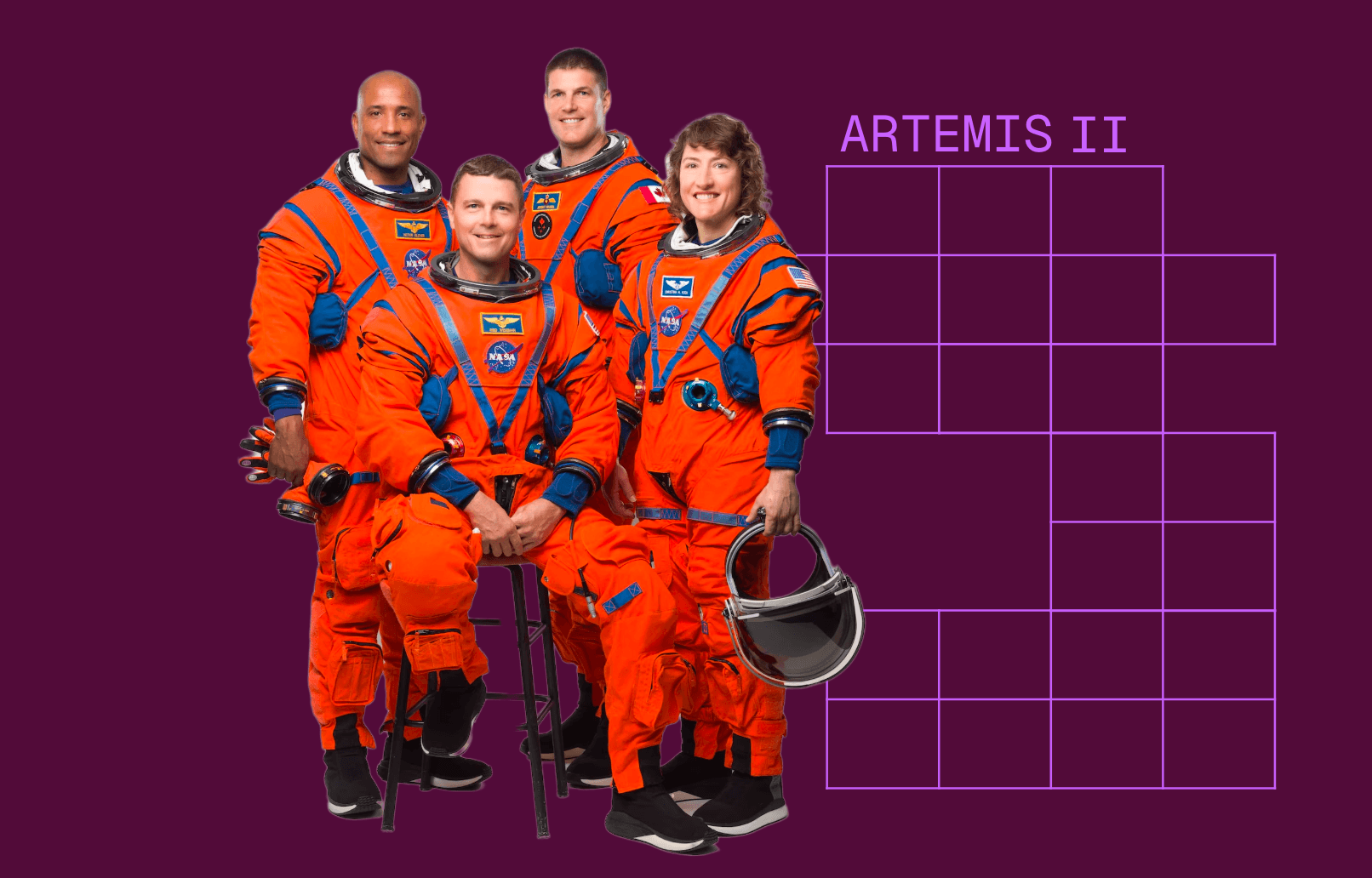
The historic Artemis II mission propelled humanity’s advancement into space—setting the stage for future Artemis missions, moon colonization, progress toward Mars, and beyond. The mission set a record for the furthest distance ever travelled by humans into space. The sophistication of the operation and the technological and scientific achievements were realized through a highly educated, experienced, and skilled NASA workforce and from those representing over 2,700 suppliers from almost every US state. The success of the mission raised the bar and expectations for continued expansion into the cosmos. These expectations bring fresh emphasis on ensuring both public and private space operations have the workforce they need to continue innovating, operating, and navigating into space.
The broader Artemis program is organized into distinct operational units including Exploration Ground Systems (infrastructure and facilities), Space Launch System (the Artemis rocket), Orion (the Artemis spacecraft), Gateway (the lunar orbit space station), Human Landing System (Artemis lunar lander), and the Extravehicular Activity and Human Surface Mobility Program (spacesuits, lunar terrain vehicle, and related mobility technologies).
These operational units, and phases of the goals of the Artemis program, are led by NASA with support of private sector contractors. As the world celebrates the Artemis II mission and anticipates future phases, let’s also celebrate the workforce that made it happen. We’ve leveraged Lightcast Profile Analytics and Lightcast Job Posting Analytics to analyze key labor force characteristics from a representative sample of NASA employees and their prime suppliers associated with the Artemis program.
Astronauts
While each of the thousands of workers that are involved in the planning, design, manufacturing, deployment, launch, and operation of space missions are critical to the success of an astronaut's mission, it is the astronauts that get the spotlight. Astronauts train for many years, take on the most risk, and have the earned privilege of being among only a few hundred people to ever have travelled to space. They also hold the torch of humanity as it reaches out beyond Earth. Frankly, "astronaut" is one of the coolest occupations to have ever existed.
For those that may dream of one day travelling to the cosmos, those that operate in the space economy, or for the curious, it will be exciting to understand the workforce characteristics of astronauts. The United States Air Force Academy and Purdue University are two of a handful of prominent higher education institutions known for producing astronauts. We’ve reviewed what these institutions say about NASA astronaut qualifications and leveraged Lightcast data to complement the analysis.
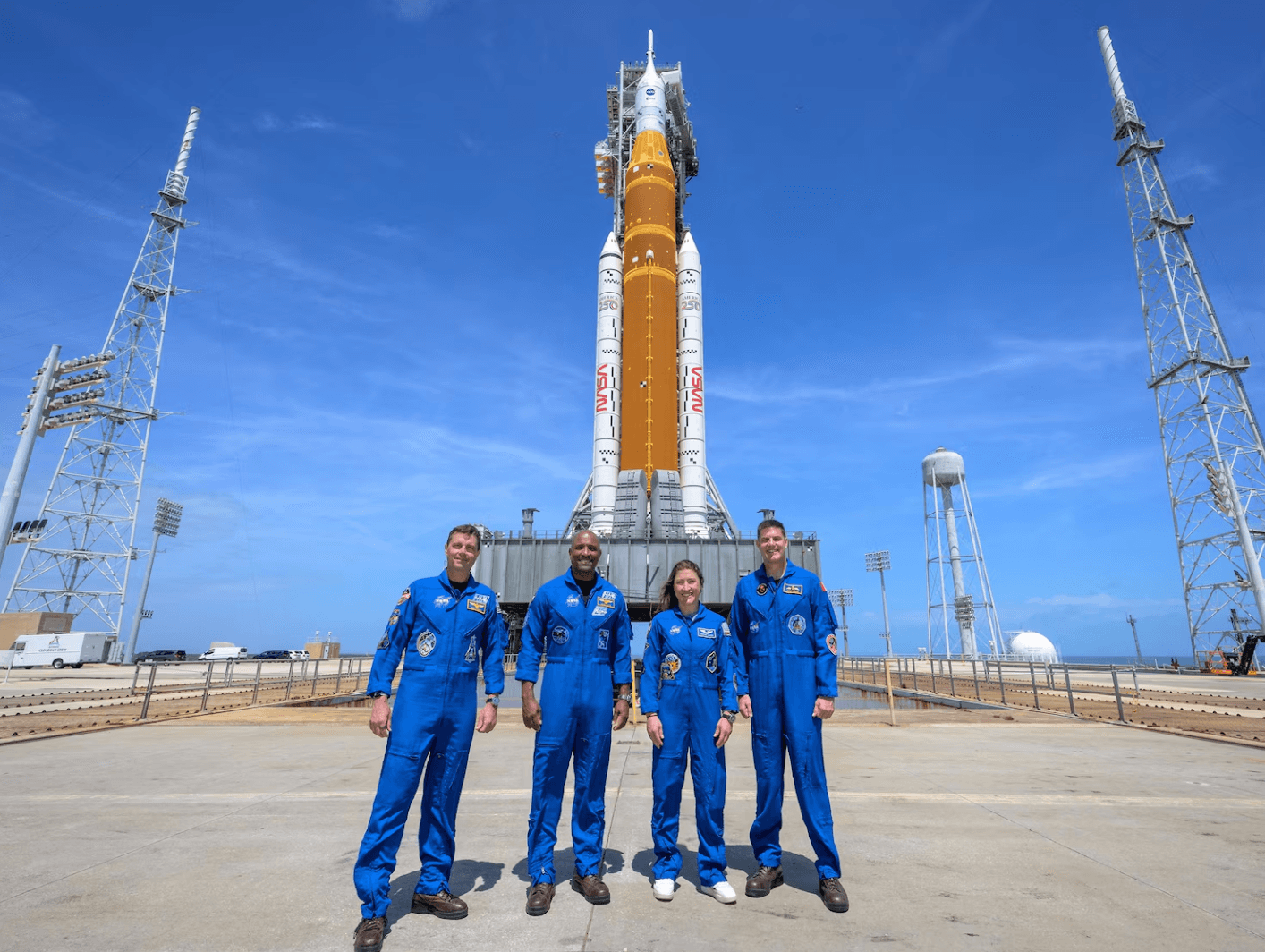
Astronaut Requirements:
According to the United States Air Force Academy and Purdue University, both civilian and military candidates can be considered for NASA astronaut selection programs. They must be US citizens and hold a bachelor’s degree in a science, technology, engineering, or mathematics (STEM) related major—advanced degrees are desirable. Astronaut pilot candidates must have at least 1,000 hours pilot-in-command time in jet aircraft. Flight test experience is clearly a distinguishable consideration. Candidates must pass the long-duration astronaut physical.
In addition to Purdue and the Air Force Academy, some of the top universities for producing astronauts include the Massachusetts Institute of Technology, Harvard, Stanford, Naval Postgraduate School, and the United States Military Academy. Common programs that astronauts are graduating from include Aerospace, Aeronautical, Astronautical/Space Engineering, Business Administration, Management and Operations, Mechanical Engineering, and Electrical, Electronics, and Communications Engineering.
Specifically related to the alma maters for the Artemis II astronauts, Reid Wiseman graduated from Rensselaer Polytechnic Institute (BS) and Johns Hopkins University (MS). Victor Glover graduated from California Polytechnic State University (BS) and earned post-graduate degrees from Naval Postgraduate School (MS), Air University (MS, MMAS), and Air Force Test Pilot School. Christina Koch graduated from North Carolina State University (2 BS and 1 MS). Jeremy Hansen graduated from the Royal Military College of Canada (BS & MS).
Distinguishable and relevant skills and qualifications are also important to consider for an astronaut selection program. Top specialized skills include Project Management, Systems Engineering, Aerospace Engineering, Flight Testing, and Data Analysis.
Complementing the desired skills are the following top qualifications: Security Clearance, CPR Certification, Commercial Pilot License, Professional Engineer License, and Private Pilot License. US-based astronauts work for some of the world’s best-known public and private space organizations including NASA, SpaceX, Blue Origin, and Virgin Galactic.
Exploration Ground Systems
Infrastructure and Facilities
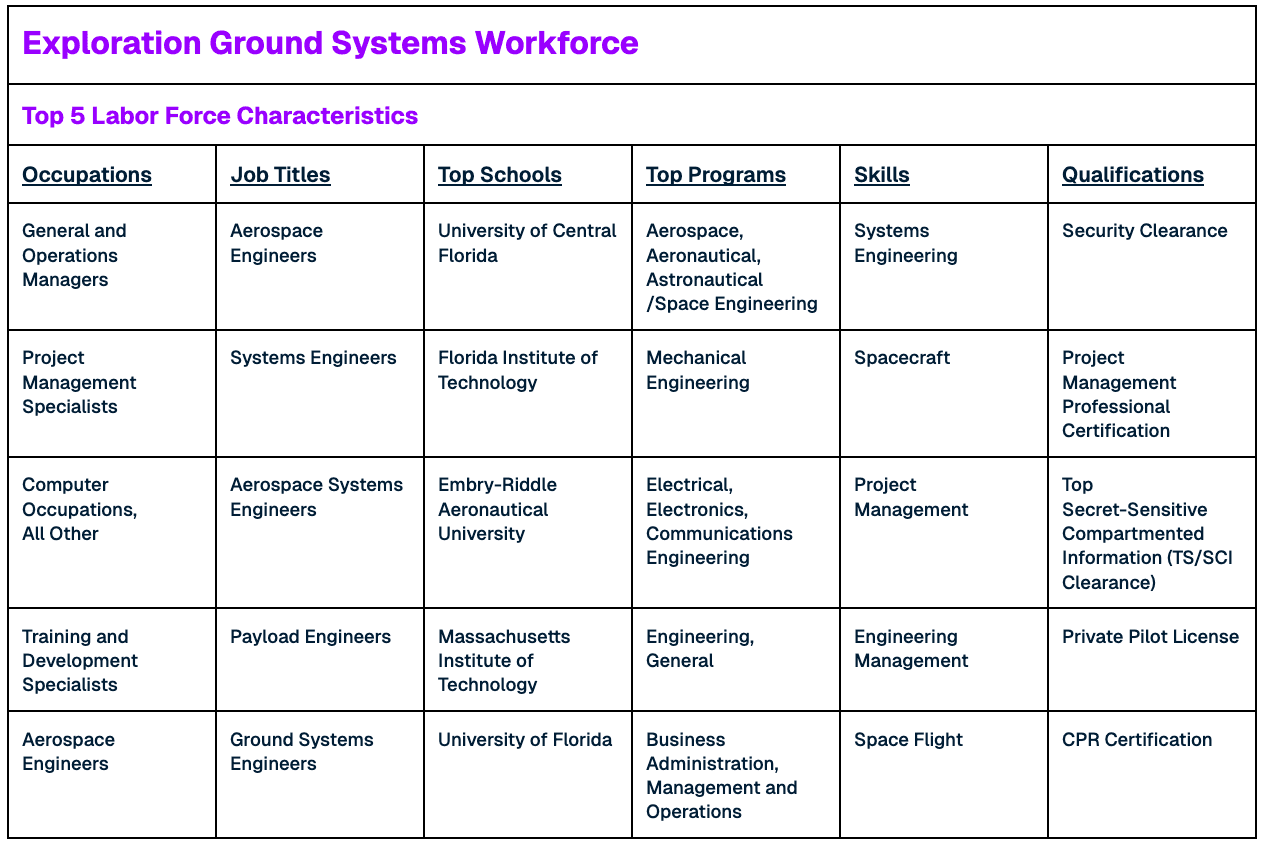
Spaceport infrastructure and operations are the foundation to the success of the Artemis program. According to NASA, “at NASA Kennedy in Florida, existing infrastructure and facilities have been modernized to support a lunar spaceport capable of launching spacecraft built and designed by both NASA and private industry, as well as orchestrating recovery operations after each mission.” NASA partnered with prime contractors including Amentum and Bechtel to modernize the infrastructure at the Kennedy Space Center. The workforce characteristics of this important foundational component of the Artemis program are seen below.
Space Launch System (SLS)
Artemis Rocket
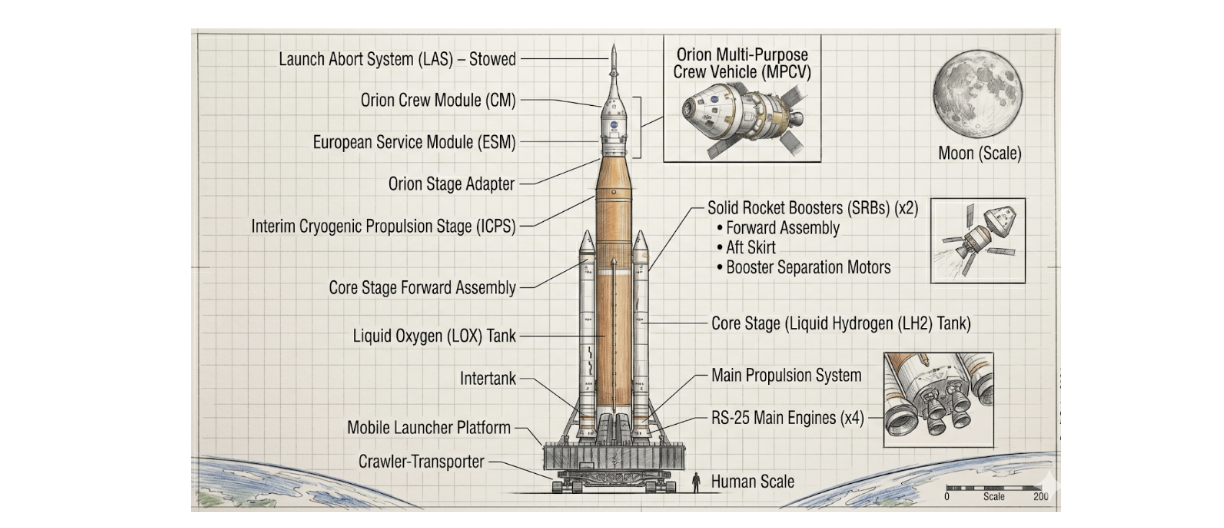
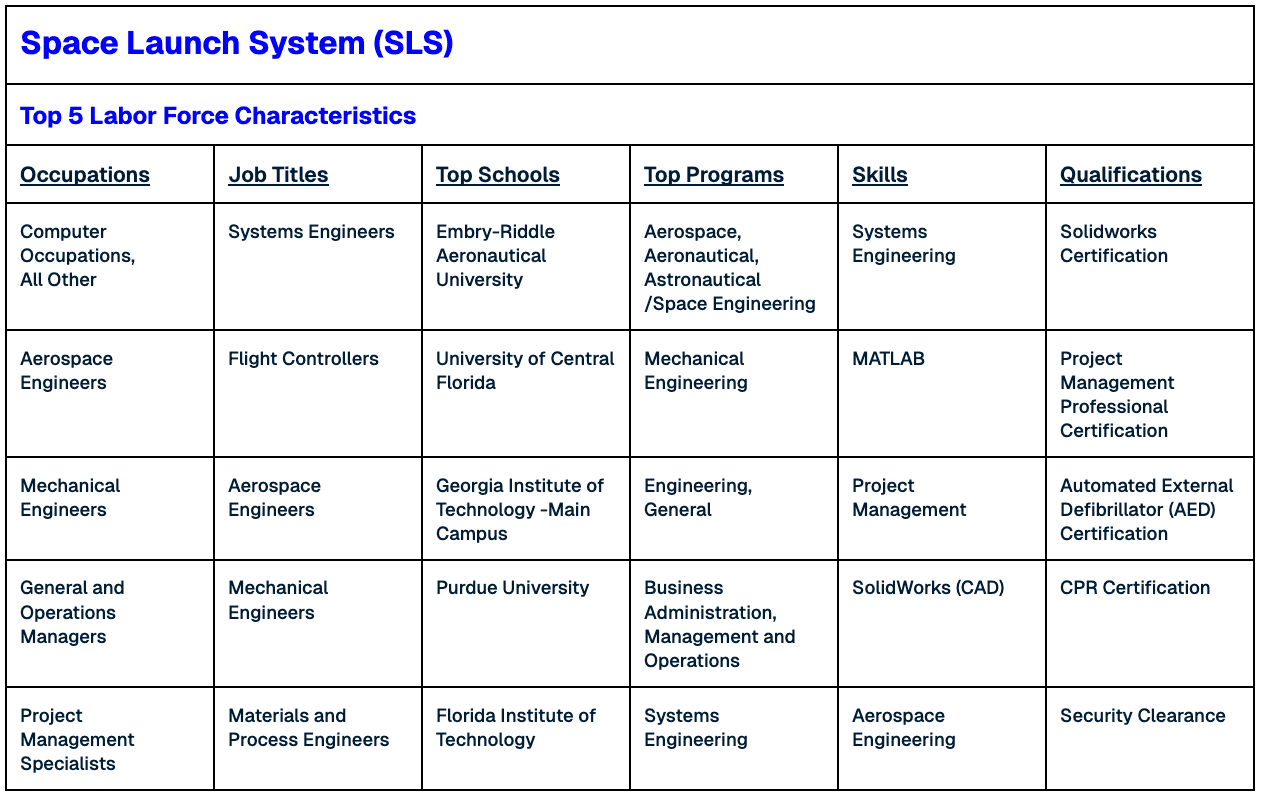
The Space Launch System (SLS) is the most powerful rocket ever built to send humans into space. According to NASA, the SLS “is the only rocket capable of sending the Orion spacecraft, four astronauts, and large cargo directly to the moon on a single launch. It is designed to be both powerful and flexible for crew, cargo, or science missions.” NASA partnered with prime contractors including Aerojet Rocketdyne, an L3Harris Technologies Company; Boeing; Northrop Grumman; and Teledyne Brown Engineering to build the rocket that has propelled humans into the next chapter of human space exploration. The workforce characteristics of the Artemis rocket program are seen below.
Orion
Artemis Spacecraft
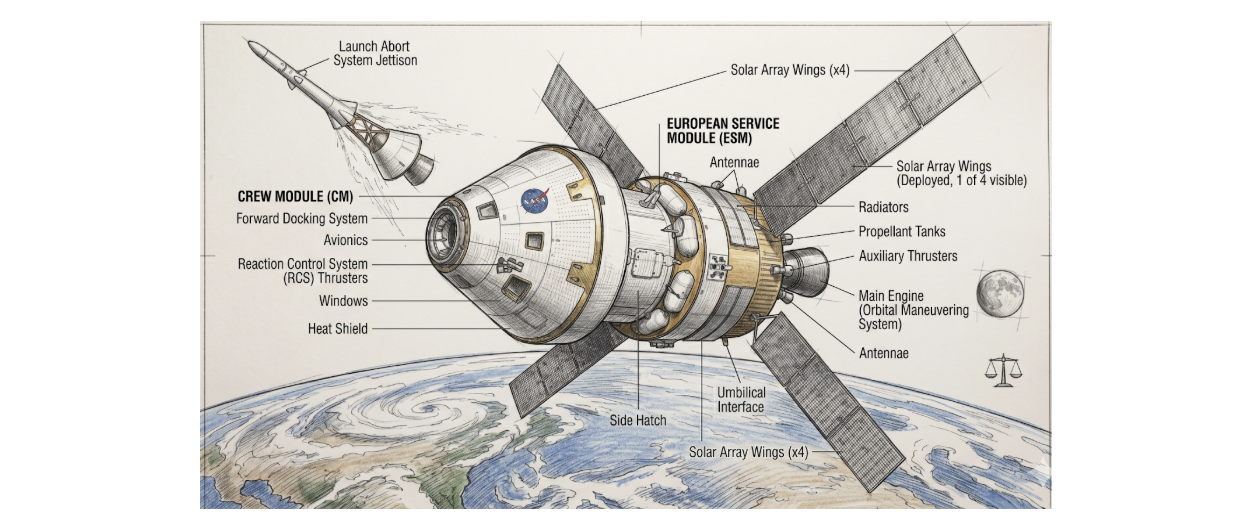
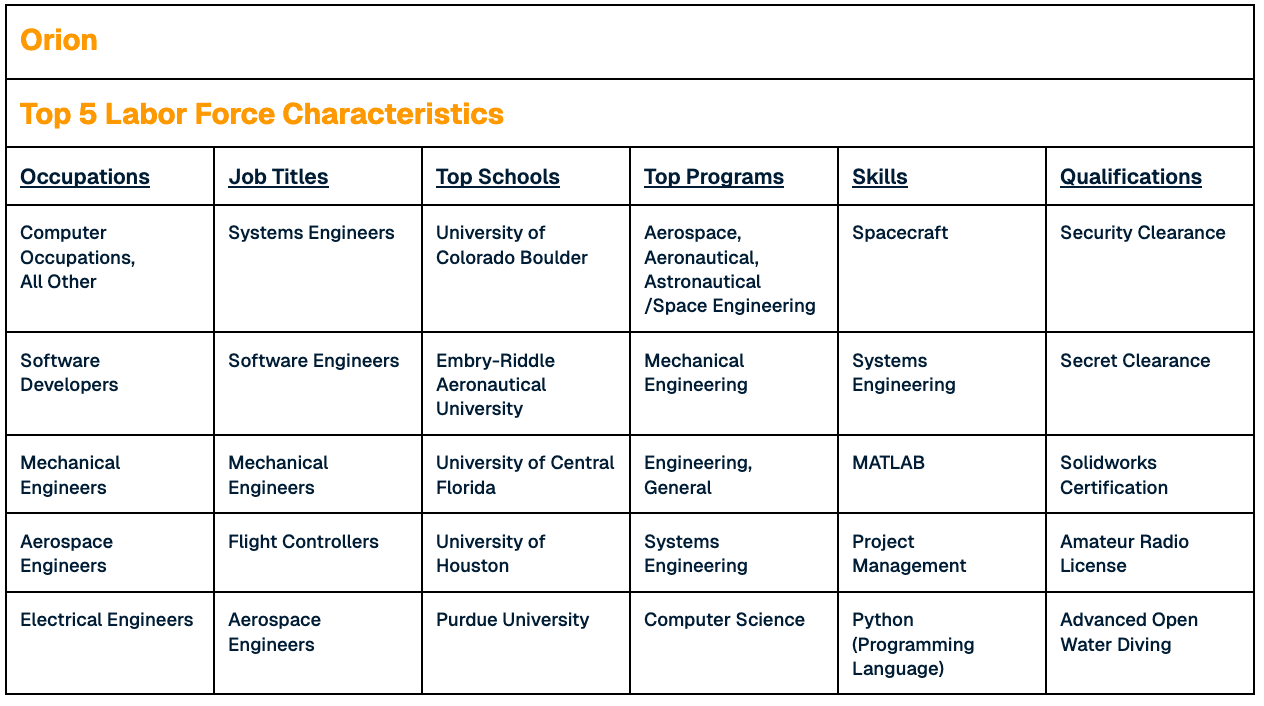
The Orion spacecraft is the Artemis astronauts’ home, office, lab, and shelter while they advance to the moon. According to NASA, “Orion is the first spacecraft in history capable of carrying humans on long-duration missions in deep space.” NASA partnered with lead contractor Lockheed Martin along with other contractors including Northrop Grumman and Aerojet Rocketdyne to build the most advanced spacecraft built to date, ensuring that the Artemis astronauts safely and successfully complete their complex lunar missions. The workforce characteristics of the Artemis Orion spacecraft program are seen below.
Gateway
Lunar Orbit Space Station
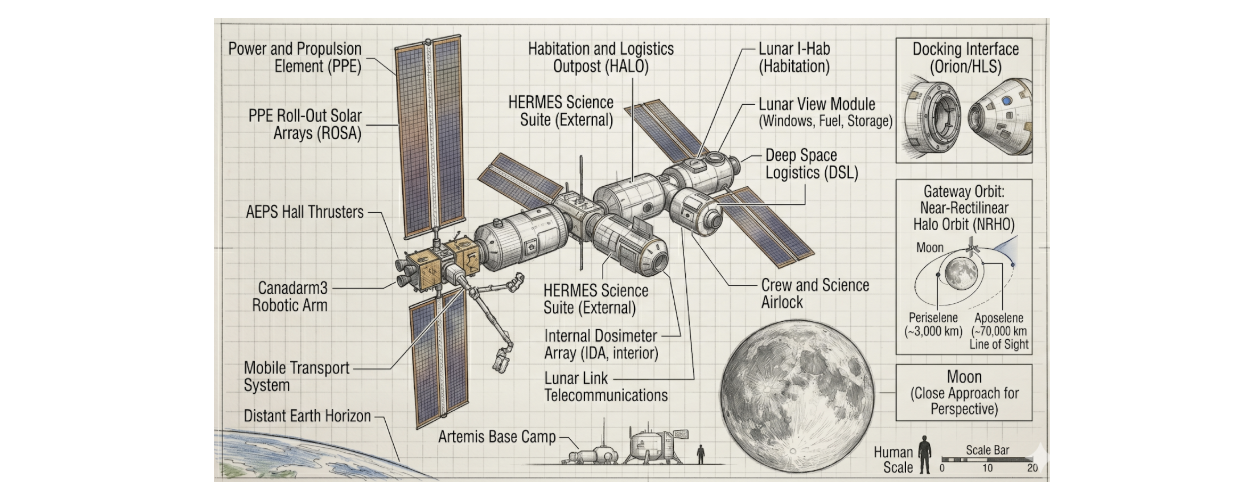
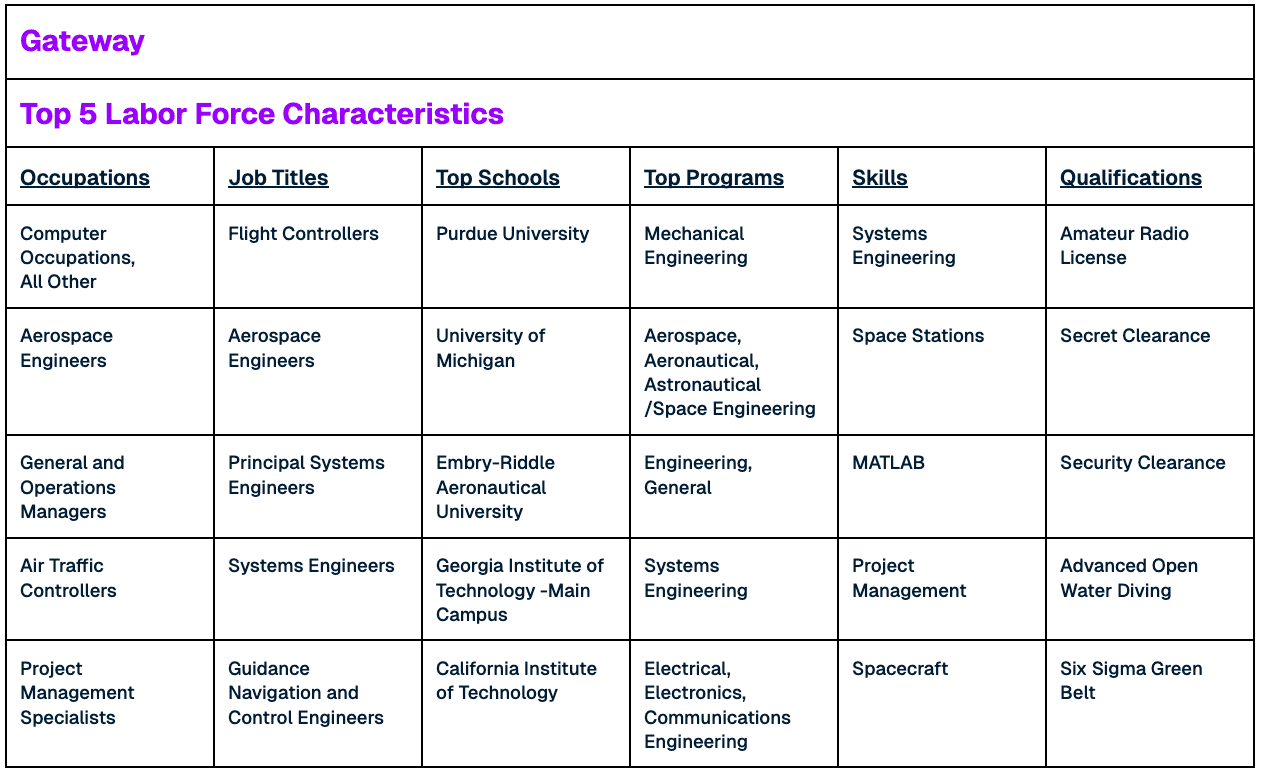
Gateway will be humanity's first lunar space station and the first space station deployed since China's space station, Tiangong, was launched in 2021. According to NASA, Gateway will be a “small space station [that] will be a multipurpose outpost orbiting the moon, providing essential support for lunar surface missions, a destination for science, and a staging point for further deep space exploration.” NASA partnered with prime contractor, Maxar Technologies, to provide power, thrust, and attitude control for Gateway. NASA also partnered with prime contractor Northrop Grumman and subcontractor Thales Alenia Space Italia to design and develop HALO, one of two Gateway habitation modules where astronauts will live, conduct science, and prepare for missions to the lunar surface. The workforce characteristics of the Artemis Gateway program are seen below.
Human Landing System (HLS)
Artemis Lunar Lander
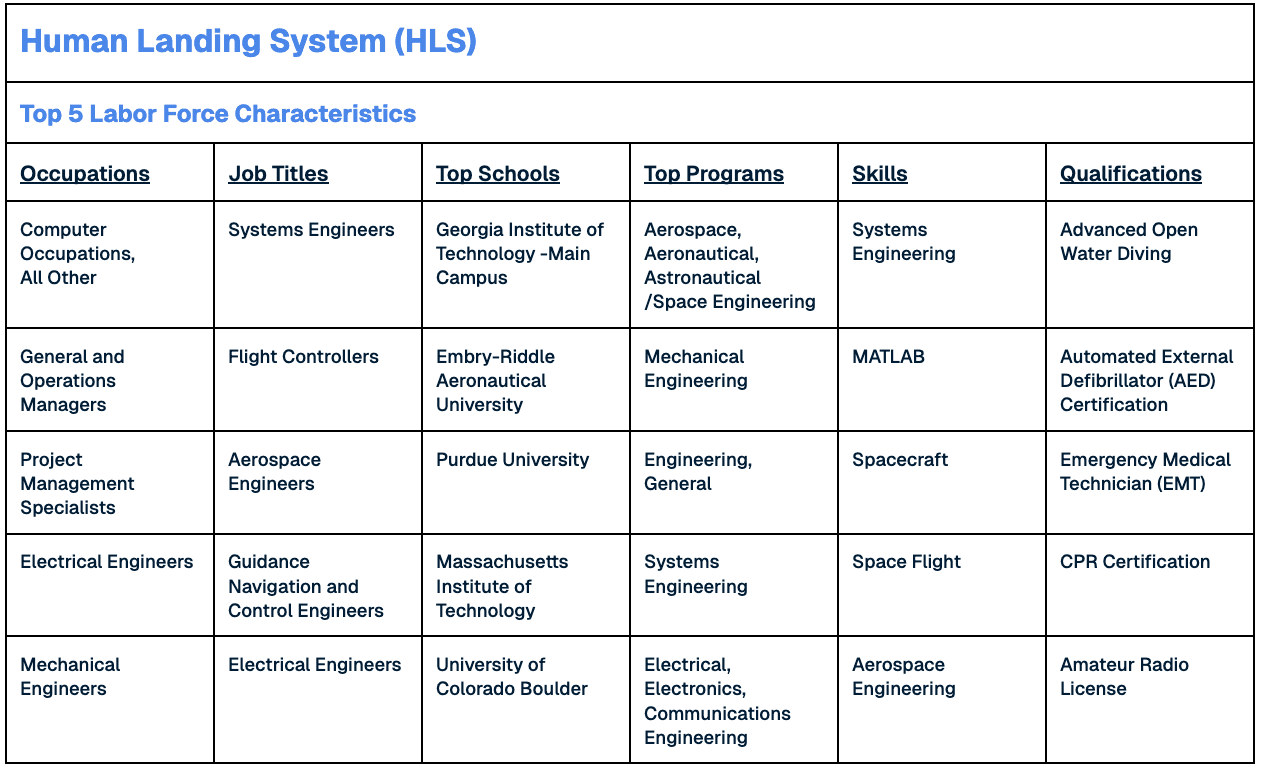
Arguably the most momentous achievement of the Artemis program will be when the Artemis IV astronaut crew lands on the moon. This will require a dynamic mission of precision, advanced technology, and skill. According to NASA, “the Human Landing System (HLS) program is working with U.S. industry to develop the landers that will safely carry Artemis astronauts from lunar orbit to the Moon’s surface and back.” NASA contracted with SpaceX to develop Starship HLS for Artemis III and IV and contracted with Blue Origin to develop the Blue Moon MK2 Lander for Artemis V. The workforce characteristics of the Artemis HLS program are seen below.
Extravehicular Activity and Human Surface Mobility Program
Artemis Spacesuits and Lunar Terrain Vehicle
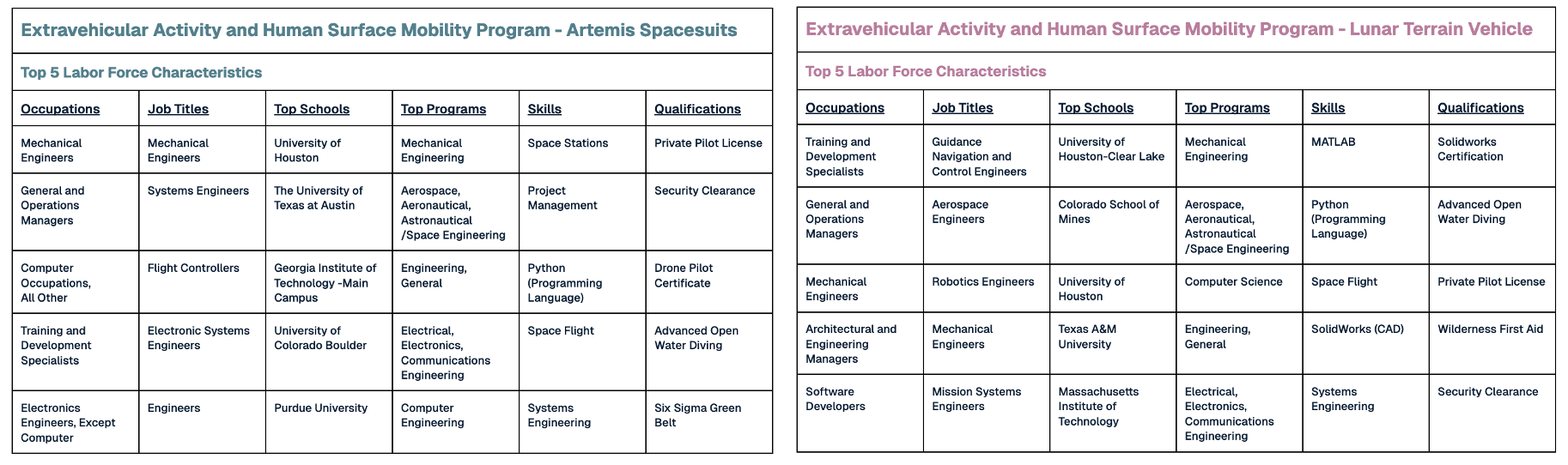
A new space program demanded new spacesuits and a modern lunar terrain vehicle. According to NASA, “NASA’s Extravehicular Activity and Human Surface Mobility Program provides safe, reliable, and effective spacewalking and surface mobility capabilities, allowing astronauts to survive and work outside the confines of a spacecraft to explore on and around the Moon.” NASA selected prime contractor Axiom Space to develop the spacesuits for Artemis III. To navigate the moon, collect samples, and conduct research, NASA selected contractors Intuitive Machines, Lunar Outpost, and Venturi Astrolab to develop the Artemis lunar terrain vehicle. The workforce characteristics of these Artemis programs are seen below.
Preparing for the Frontier
Our analysis of the Artemis workforce provides a strong representation of the occupations, job titles, educational attainment, skills, and qualifications that are required to meet the demands of some of the most innovative, elaborate, and pioneering developments in human exploration. As we look to the cosmos, we can still remember that it's workers here on Earth—with specific and valuable skills and occupations—that make our journey to the stars possible.