Workforce decisions don’t stop at borders. Neither should your workforce data.
Business leaders know they need labor market data to guide decisions on hiring and workforce planning. Without accurate intelligence, you won’t know where to locate or how to find talent. That doesn’t change on the world stage: as organizations operate in an increasingly complex global environment, workforce decisions require clear, consistent insight worldwide.
That’s why Lightcast has expanded its global data, creating the industry’s most comprehensive source of labor market intelligence.
Three Numbers: 300%, 99%, 165
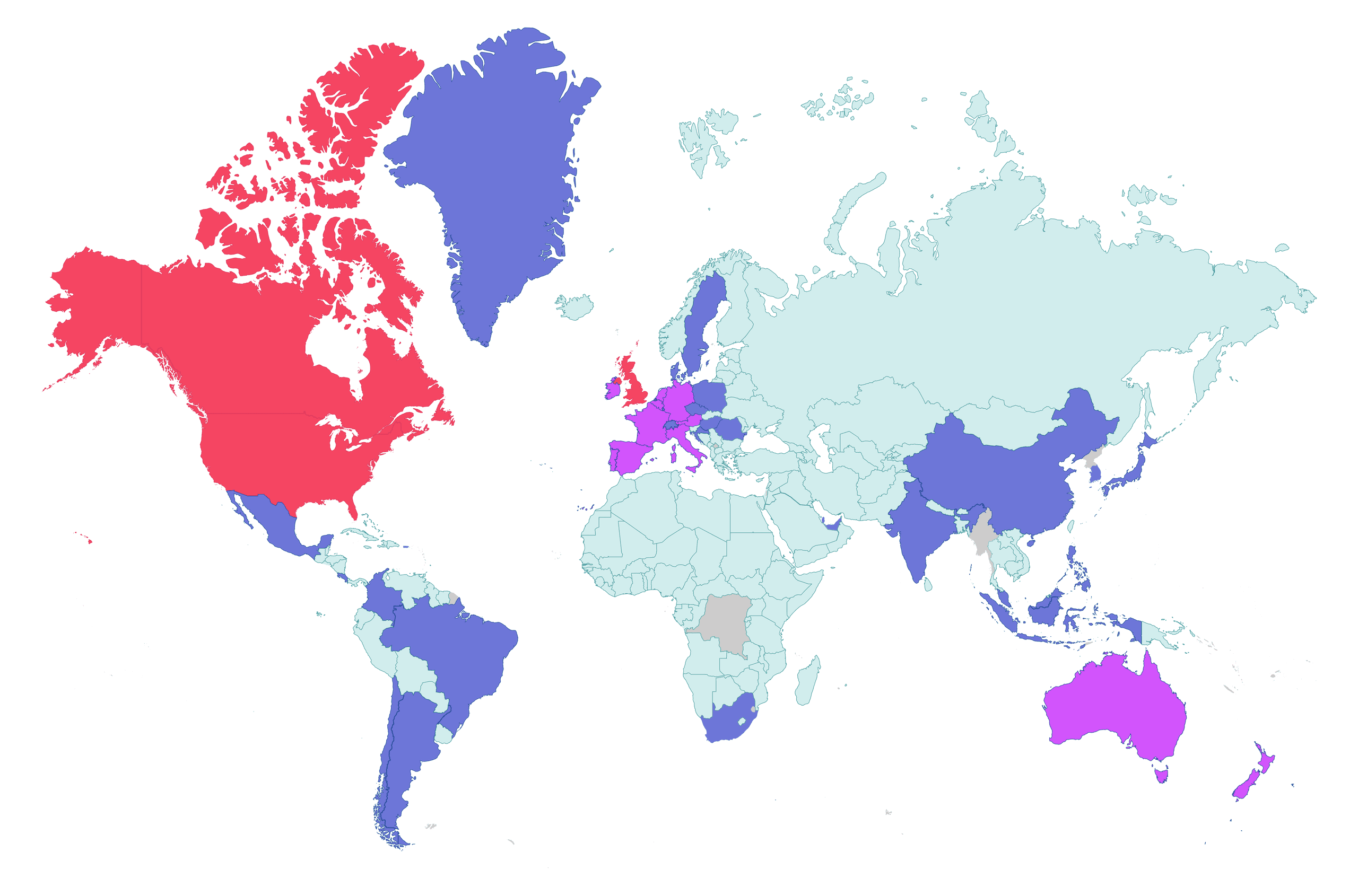
This launch expands Lightcast global coverage 300%, going from 41 countries to 165, covering markets that make up 99% of the world’s GDP. The combined global dataset is accessible now through Analyst, APIs, and Data Shares, making it easy to access and act on global workforce intelligence using the same tools and workflows your teams already rely on.
When you need to hire and build your workforce in different countries, it’s a waste of time to create separate processes for each. Instead of treating international markets like a secondary, isolated project, you can work from a consistent foundation, without sacrificing granularity and local nuance.
This matters because global workforce planning breaks down with an incomplete view. You can’t confidently compare skills, demand signals, or talent supply if key markets are missing, lacking detail, or stuck in another data workflow. With coverage of markets that make up 99% of global GDP, you can be confident that your data comes from the regions where the world’s economic activity actually comes from.
To go along with the comprehensive breadth, Lightcast also provides the standardization that makes global data comparisons practical and useful. Our Occupation Taxonomy and Skills Taxonomy allow you to make apples-to-apples comparisons by standardizing labor market data across countries, so you can compare roles, skills, and trends without getting derailed by mismatched classifications. We’ve also introduced Lightcast Administrative Areas, a standardized view that allows for simpler comparison across metro areas, They align with local standards in each country that Lightcast maintains data for—using NUTS area codes across the European Union, and FIPS subdivisions of the United States, for example.
Four Levels of Granularity
Not all labor markets are created equal. While Lightcast global data now covers 165 countries, some datasets are deeper than others. Instead of lumping them all together, we’ve classified our coverage into four Global Data Sets, so you can easily identify what level of granularity you need in a given region.
Imagine you’re planning a trip and ask two people what the weather will be like. One has access to radar and will tell you the wind speed and the temperature by the hour. The other has access to the weekly forecast in the newspaper and thinks today will be most sunny” Both gave you a weather forecast, sure—but one has more nuance than the other.
Many global datasets simply say they “cover” a country without explaining what that coverage actually includes. Lightcast’s Global Data Sets show the level of detail upfront—so you know where you can analyze deeply and where you’re looking at broader trends.
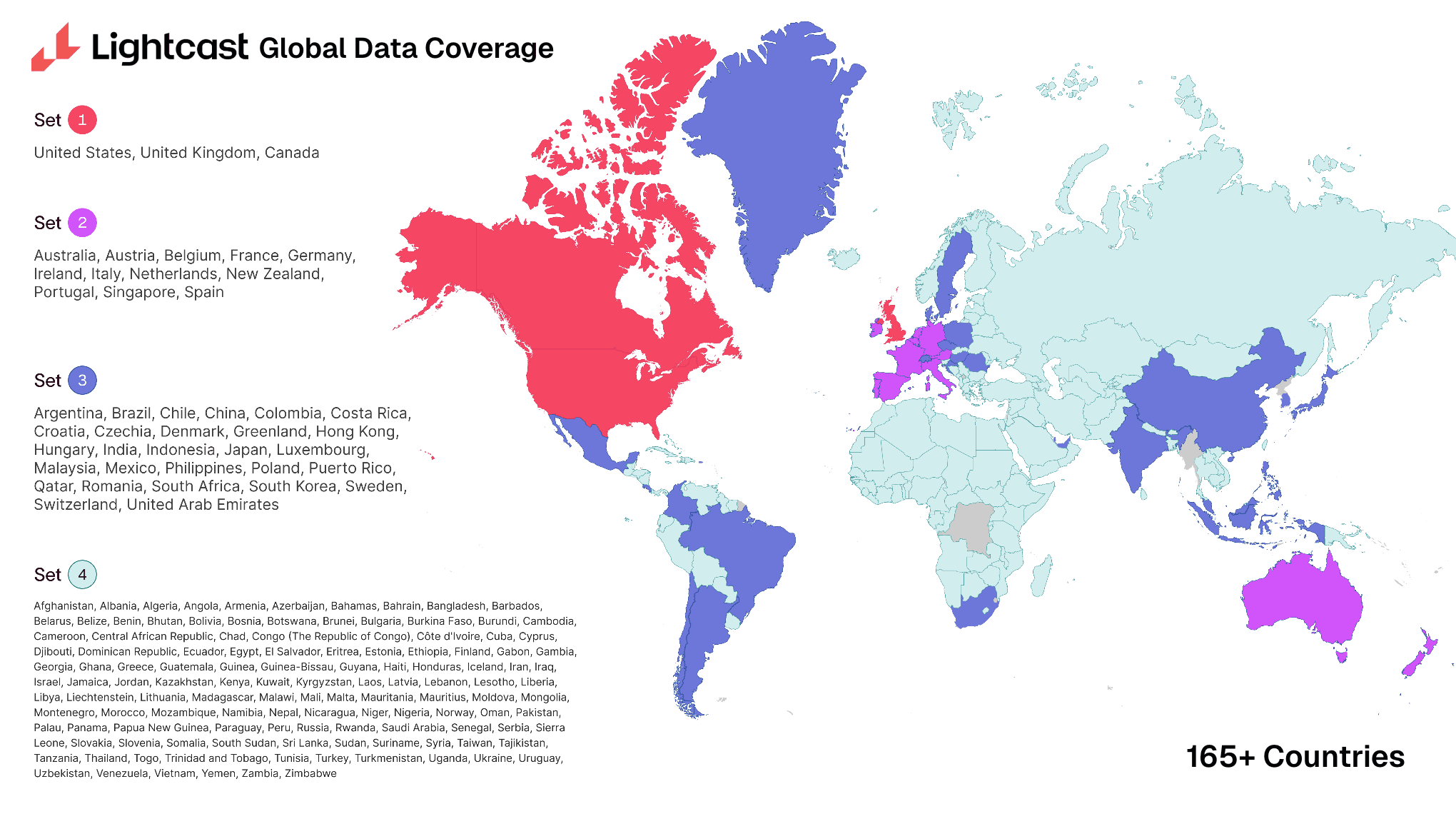
Set 1 offers the most comprehensive data: full demand and supply, workforce estimates, compensation, demographics, and 10+ years of history. Set 2 provides strong core coverage in major global markets with multi-year demand data, worker estimates, and salary insights. Set 3 delivers foundational macro labor market signals and key profile attributes. Set 4 gives basic visibility into multinational job postings and workforce signals in emerging or underrepresented economies, ensuring a consistent global view while highlighting depth.
When you have clear expectations about what kind of granularity to expect, you can make decisions based on knowledge instead of guesswork, and be confident about the level of information you have.
Translations, Profiles, and Next Steps
Increased coverage is the foundation, and the Global Data Sets provide clarity, but this expansion also includes major steps forward in the scope and capability of Lightcast global data.
Global workforce intelligence only works if the data travels well across languages. Lightcast now processes labor market signals in 17 languages, capturing job content as it appears in each local market. That means a job posting in Japanese, compensation data in Croatian, and education requirements in English can all be analyzed within the same framework—without losing meaning in translation.
At the same time, the dataset has expanded with 100+ million additional de-duplicated and vetted profiles, strengthening the ability to analyze talent supply across regions. Together, multilingual processing and deeper profile coverage create a clearer, more reliable view of the global workforce.
The expanded dataset is available immediately through the Talent Analyst software platform, APIs, and Data Shares, with flexible, enterprise-ready integration options.
With a database spanning over 3 billion job postings, 600+ million career profiles, and 100+ government sources—and now expanded across 165+ countries—this release brings global coverage and local precision together in one place. Learn more at our Global Data hub page.